
Walk into any hardware supplier and ask for self-drilling screws, and you’ll get hit with a wall of questions: What gauge steel? Indoor or outdoor? What’s the substrate? Point size?
I get it. The selection seems unnecessarily complicated. But here’s the reality—grab the wrong screw and you’re either burning through drill bits, snapping screws, or coming back to fix loose connections in six months.
Let me walk you through how to actually pick the right ones, based on what I’ve learned from way too many mistakes over the years.
Understanding What “Self-Drilling” Actually Means
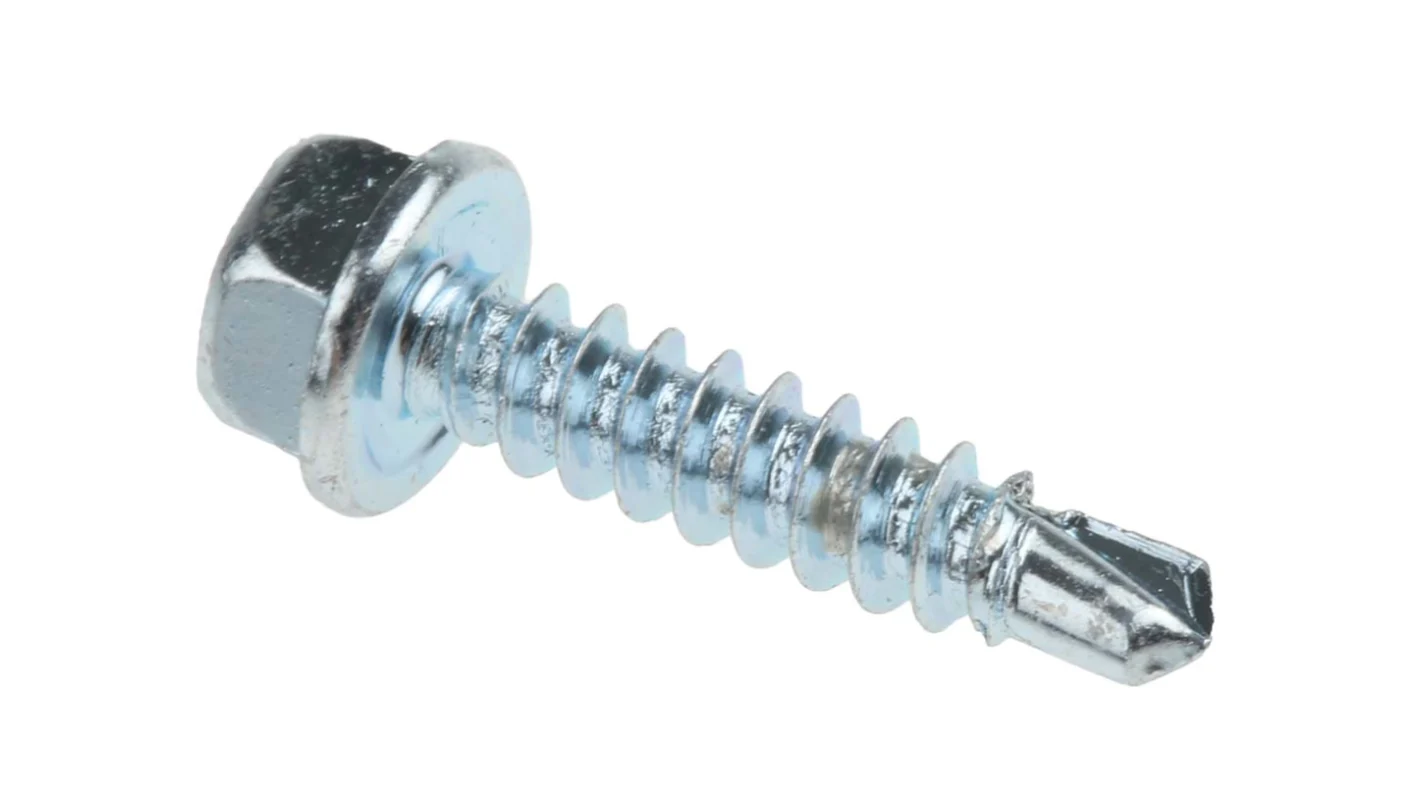
Self-drilling screws (often called Tek screws after the brand name) have a drill bit point that cuts through metal without pre-drilling. That’s the whole point—one operation instead of two.
But here’s where people mess up: not all self-drilling screws can drill through all materials. The drill point is rated for specific material thicknesses. Use a #2 point on thick steel and you’ll just spin there burning through battery packs.
The Point Number Actually Matters
The number after “Tek” or on the box refers to the drill point’s capability:
#1 Point – Up to 1.5mm steel. This is for sheet metal, ductwork, light steel framing. Most common for HVAC and roofing work.
#2 Point – Up to 3.2mm steel. Your general-purpose option for structural steel, purlins, girts, most commercial applications.
#3 Point – Up to 6.4mm steel. For heavy structural connections, thick steel brackets, industrial applications.
#4 Point – Up to 9.5mm steel. Honestly, if you need this, you probably already know what you’re doing.
#5 Point – Up to 12.7mm steel. Specialty applications only. We don’t even stock these regularly.
Here’s the thing though: bigger isn’t always better. A #3 point in thin material will just tear through and you’ll lose your grip. Match the point to what you’re actually drilling.
Thread Type: Fine vs Coarse
This is where I see people make expensive mistakes.
Fine thread (Type 17) – Cuts its own thread, designed for metal-to-metal applications. The thread pitch is tight, giving you more holding power in steel.
Coarse thread (Type AB) – These are for metal to wood or other soft materials. Wider thread spacing, better grip in timber or fiber cement.
I’ve seen whole pallets of screws ordered wrong because someone didn’t specify thread type. Using coarse thread in steel-to-steel? You’ll get maybe 60% of the holding power you need.
Head Types and When to Use Them
Hex washer head – My go-to for most structural applications. Easy to drive with an impact gun, the built-in washer spreads the load, and they look professional.
Pan head – Lower profile, good for sheet metal work where you don’t want snags.
Flat/countersunk head – When you need flush mounting. Common in cladding applications.
Modified truss head – Extra wide bearing surface. Good for bridging oversized holes or attaching to soft materials.
The head choice actually affects your load capacity. That little washer on a hex head screw? It’s not cosmetic—it’s preventing pull-through failure.
Coating: This is Where Longevity Lives or Dies
I’ll be straight with you: the coating determines whether you’re back replacing these in two years or whether they’ll outlast the building.
Zinc plated – Cheap, indoor use only. These will rust if they even look at moisture funny.
Galvanized – Better protection, okay for some outdoor applications. Still wouldn’t use them on coastal projects.
Class 3 (Zinc-Aluminum coating) – Good corrosion resistance, suitable for most Australian conditions. This is the minimum I’ll use for outdoor work.
Class 4 (Dacromet/Geomet coating) – Excellent corrosion resistance. Coastal areas, high humidity, industrial environments.
Stainless steel – Maximum corrosion resistance. Yes, they cost 3-4 times more. But try explaining to a client why their $500,000 facade has rusty streaks after 18 months.
I learned this lesson the hard way on a coastal renovation. We saved $800 using galvanized instead of stainless. Cost us $12,000 in labor to replace them all two years later, plus the reputation hit.
Matching Screw Length to Your Application
This seems obvious, but I’ve seen it done wrong countless times.
The rule: Your screw needs at least 3 full threads engaged in the substrate you’re fixing to.
If you’re attaching 1mm sheet to 2mm steel, and you pick a 12mm screw, you’re only getting about 9mm into the base material. That works.
But if you go too long, you risk bottoming out or puncturing through the other side. Too short and you don’t get proper thread engagement.
Quick calculation: Thickness of top material + 10mm minimum into base material = your minimum screw length.
Diameter Matters More Than You Think
Most applications use #10 (4.8mm) or #12 (5.5mm) screws. But here’s what you need to know:
Larger diameter = higher shear and pullout strength, but also more likely to split thin material or crack brittle substrates.
For most steel framing and cladding work, #12 screws are the sweet spot. Structural steel connections often spec #14 (6.3mm) or larger.
Don’t just throw bigger screws at everything thinking it’s safer. I’ve seen 6mm screws crack fiber cement that would have been fine with 4.8mm.
The Speed vs Quality Trade-Off
Wings vs no wings—this matters more than people realize.
Winged screws – The wings ream out the hole as the screw goes in, reducing friction and heat buildup. This means faster driving and less chance of snapping the screw.
The downside? The reamed hole is larger, which can reduce pullout resistance. For structural applications, you generally want wingless.
Standard (no wings) – Slower to drive, more friction, but you get a tighter fit and better holding power.
For repetitive non-structural work (cladding, ductwork), winged screws save your wrists and your batteries. For engineered connections, stick with standard.
Real-World Application Guide
Let me break down what I actually use:
Steel framing (residential/light commercial):
- #12 x 25mm Type 17 hex head
- #2 point
- Class 3 coating minimum
- Winged for production work
Purlins and girts:
- #12 x 32mm Type 17 hex head
- #2 or #3 point depending on steel gauge
- Class 3 or Class 4 for coastal
- Standard (no wings)
Cladding to steel:
- #12 x 25-50mm (depending on insulation thickness)
- Type 17 hex head with bonded washer
- Winged for speed
- Match coating to environment
Metal roofing:
- #12 x 25-65mm (depending on purlin spacing and roofing profile)
- Hex head with EPDM washer
- Class 4 minimum (roofs are harsh environments)
- Color-matched head if client cares about appearance
Ductwork and HVAC:
- #10 x 16mm Type 17 pan head
- #1 point
- Winged
- Zinc plated is usually fine (indoor)
Common Mistakes I Keep Seeing
Over-driving screws. Set your clutch properly. If you’re deforming the washer or stripping threads, you’re going too hard.
Under-driving screws. The washer should be seated firmly. If it’s loose, you’re not getting proper load distribution.
Wrong point for the material. This is the #1 issue. Check the steel thickness before you order.
Mixing indoor screws outdoors. Zinc-plated screws have no place on an exterior application. Period.
Not checking compatibility with substrate. Some coatings don’t play nice with treated timber or certain metals. Check your technical data sheets.
The Cost Conversation Nobody Wants to Have
Quality self-drilling screws cost more. A box of Class 4 stainless can be 4-5 times the price of zinc-plated.
But let’s do the actual math on a typical job:
Average commercial project uses maybe $2,000-5,000 worth of fasteners. Going from basic to quality might add $1,500 to that.
One callback to replace corroded fasteners? You’re looking at $8,000-15,000 in labor, access equipment, and disruption.
I stopped trying to save money on fasteners years ago. The savings are imaginary.
When to Pre-Drill Anyway
Sometimes self-drilling isn’t the right answer:
- Hardened steel or stainless steel base material
- Very thick steel (over the point’s capacity)
- Precision alignment requirements
- Brittle or crack-prone substrates
Don’t be afraid to pre-drill if the situation calls for it. Self-drilling is a time-saver, not a religion.
Storage and Handling
This sounds basic, but it matters:
Keep screws in their original packaging until use. Those little boxes aren’t just for looks—they prevent corrosion from moisture and keep different types separated.
Store in a dry area. Even Class 4 coated screws can corrode if you leave them in a damp container.
Check your screws before use. If you see rust on supposedly corrosion-resistant screws, don’t use them. Either they’re mislabeled or they’ve been stored wrong.
What to Ask Your Supplier
When you call in your order, you should be able to answer:
- What’s the base material thickness?
- What’s the top material thickness?
- Indoor or outdoor application?
- What’s the environment? (Coastal, industrial, standard)
- Structural or non-structural?
- Do you need color-matched heads?
If your supplier doesn’t ask these questions, they’re not helping you get the right product.
The Bottom Line
Self-drilling screws aren’t complicated once you understand the system:
- Match the point to your material thickness
- Choose fine thread for metal, coarse for wood
- Pick coating based on environment, not price
- Calculate proper length
- Use hex heads for structural, pan heads for sheet metal
Get these fundamentals right and you’ll stop second-guessing yourself in the fastener aisle.
Need help selecting the right self-drilling screws for your project? Our technical team at TOPFIX can review your specifications and recommend the best product. Call 1300 867 349 or visit our Moorebank location.