

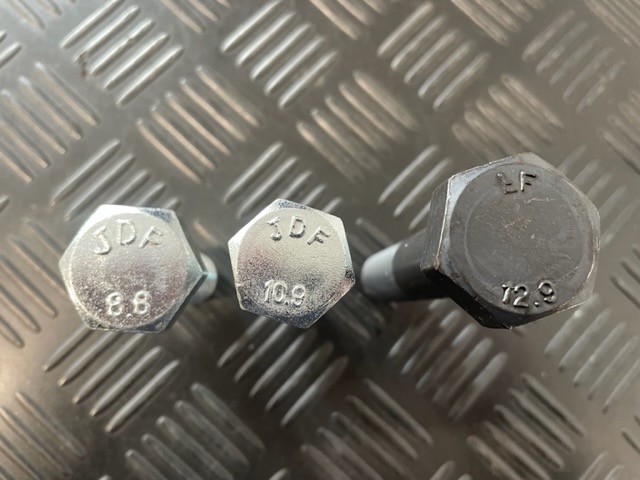
Complete Guide to Fastener Grades: 4.6, 8.8, 10.9, and 12.9 Explained
If you’ve ever pulled a bolt out of a box and seen 4.6, 8.8, 10.9, or 12.9 stamped on the head, that marking isn’t decoration — it’s the fastest way to tell what that fastener can actually handle.
In Australia, choosing the wrong grade is one of those mistakes that doesn’t always fail immediately… until it does. Let’s break down fastener grades, what the numbers mean, and how to pick the right bolt grades in Australia without overpaying or under-speccing.
What do bolt grades mean (the simple explanation)
Most metric bolts follow the ISO “property class” system. The two numbers tell you the bolt’s minimum tensile strength and its yield relationship. A practical rule of thumb:
- First number × 100 = approximate minimum tensile strength (MPa)
- Second number = relationship to yield strength
That’s why higher numbers generally mean stronger (and less forgiving) bolts.
Grade 4.6 — the “general purpose” bolt
Best for: light duty fixtures, brackets, non-structural timber/steel applications, general fabrication where loads are modest.
Why you’d choose it:
- Cheaper and easier to work with
- Often used where the fastener is not the limiting factor (the material around it is)
Where people go wrong: using 4.6 where vibration, shock load, or structural load exists. That’s when you see loosening, elongation, or snapped shanks.
Grade 8.8 — the workhorse for construction
Best for: general construction bolting, machinery, structural-type applications where engineering requires it (and where standards allow).
If you asked most builders what “high tensile” means, 8.8 is usually what they’re picturing. It’s strong, available everywhere, and in many jobs it’s the sweet spot of performance vs cost.
Typical use cases:
- Steel-to-steel connections (non-critical / non-preloaded)
- Heavy brackets, plant mounting, frames
Grade 10.9 — when 8.8 isn’t enough
Best for: higher load joints, smaller diameters carrying bigger loads, engineered mechanical assemblies.
8.8 vs 10.9 bolts — what changes in real life?
- 10.9 handles more load for the same diameter
- It’s less tolerant of poor installation (bad torque, dirty threads, dodgy washers)
- If the joint design is wrong, 10.9 can fail more “cleanly” and suddenly (rather than bending/stretching first)
This is where installation discipline matters: correct torque method, clean threads, correct washer stack, and correct joint design.
Grade 12.9 — very high strength, specialised use
Best for: specialist engineering and machinery, high clamp force requirements, precision assemblies.
12.9 is not a “just use it everywhere” upgrade. In construction environments, the downsides can bite:
- more brittle behaviour under certain conditions
- more sensitive to over-torque and thread damage
- often unnecessary cost
Quick selection guide (Australia)
Use this as a starting point — then follow project specs/engineering requirements.
- 4.6: light duty, fixtures, non-critical brackets
- 8.8: most construction bolting where high tensile is needed
- 10.9: higher load, engineered joints, higher clamp demand
- 12.9: specialist mechanical engineering / high clamp precision assemblies
Don’t mix grades (and don’t ignore nuts & washers)
One common site issue: people grab a high-grade bolt and pair it with random nuts/washers. In structural bolting systems, the assembly matters (bolt + nut + washer). (More on that in the AS/NZS 1252 article below.)
Internal links (Topfix)
- If you’re ordering to site and want predictable delivery windows, see Topfix Shipping: https://topfix.com.au/shipping/
- For fastener material selection in harsh conditions, this guide pairs well: https://topfix.com.au/best-construction-fasteners-for-australian-conditions-complete-guide/
- Need help matching grades to an application? Contact Us: https://topfix.com.au/contact