
Understanding Fastener Coatings: Zinc vs Hot-Dip Galvanized vs Dacromet
Fastener coatings exist for one reason: corrosion protection. But not all coatings perform the same, and choosing the wrong one is a common cause of premature failure.
This guide explains the most common fastener coatings used in construction — zinc plated, hot-dip galvanised, and Dacromet — and when each actually makes sense.
Why Coatings Matter
Steel fasteners will corrode when exposed to moisture and oxygen. Coatings slow this process and, in some cases, sacrifice themselves to protect the base metal.
Understanding zinc plated vs galvanised (and where Dacromet fits) helps you choose the right level of corrosion protection — without overspending.
Zinc Plated Fasteners (Electroplated)
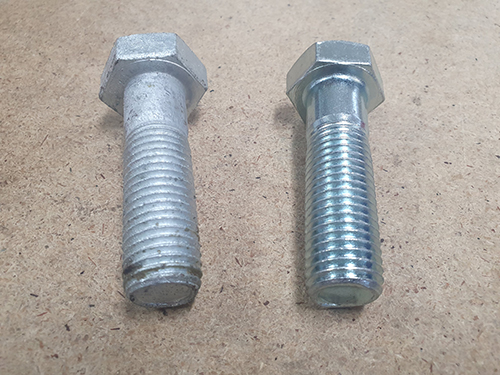
Zinc plating is a thin coating applied electrically.
Pros:
- Clean, uniform finish
- Low cost
- Suitable for internal or dry environments
Cons:
- Limited corrosion resistance
- Not suitable for outdoor or coastal exposure
Zinc plated fasteners are common for internal applications, cabinetry, light construction, and protected steelwork.
Hot-Dip Galvanized Fasteners
Hot-dip galvanising (HDG) involves dipping the fastener into molten zinc, creating a thick, bonded coating.
Pros:
- Excellent corrosion resistance
- Ideal for outdoor and structural use
- Long service life
Cons:
- Thicker coating affects thread fit
- Requires galvanised-compatible nuts
- Rougher finish
HDG fasteners are widely used in:
- Structural steel
- Civil works
- Outdoor construction
- Coastal and high-exposure environments
Dacromet Coatings
Dacromet is a zinc-aluminium flake coating applied in layers and baked on.
Pros:
- High corrosion resistance
- Thin, uniform coating
- No hydrogen embrittlement risk
- Good thread fit
Cons:
- Higher cost than zinc plating
- Not suitable for all environments
- Limited availability in some fastener types
Dacromet is often specified where:
- Precise torque control is needed
- Coating thickness must be controlled
- High-performance corrosion protection is required
Zinc Plated vs Galvanized: The Short Answer
- Internal, dry areas → Zinc plated
- External, exposed areas → Hot-dip galvanised
- Engineered, high-spec jobs → Dacromet (if specified)
Coatings and Torque Interaction
Coatings affect friction — and friction affects torque.
Galvanised and coated fasteners often require different torque values than plain steel. This is critical for structural and preloaded connections.
👉 Related reading:
Torque Specifications for Construction Bolts
Final Thoughts on Fastener Coatings
Coatings are not cosmetic — they are functional. Choosing the correct coating extends service life, reduces maintenance, and prevents early failure.
When in doubt:
- Match the coating to the environment
- Check compatibility with nuts and washers
- Follow project specifications