
Self-Drilling vs Self-Tapping: Understanding the Critical Difference
The terms “self-drilling” and “self-tapping” are often used interchangeably in construction supply catalogs, but understanding the fundamental difference between these two fastener types can save hours of labor, prevent material damage, and ensure proper connections in your projects.
At Topfix, we supply both self-drilling and self-tapping screws to Sydney builders and regularly help contractors select the right fastener for specific applications. This comprehensive guide explains the technical differences, appropriate applications, and selection criteria for both types.
Defining Self-Tapping and Self-Drilling Screws
Self-Tapping Screws: The Foundation
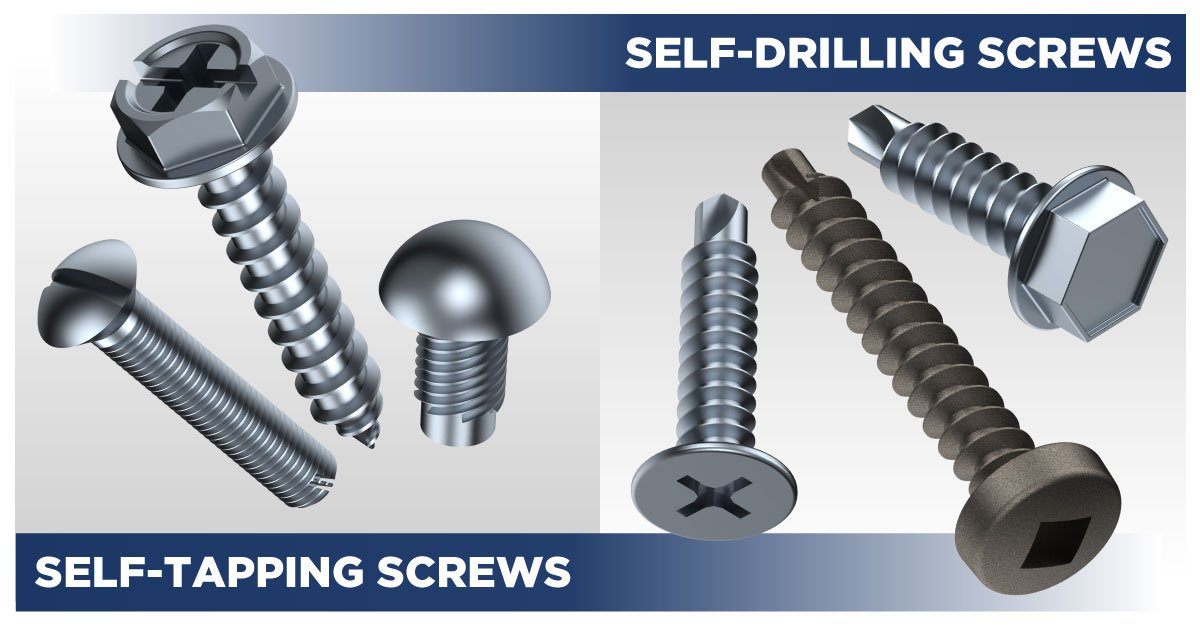
Definition: Self-tapping screws cut or form their own threads in pre-drilled pilot holes as they’re driven into the material. They do NOT drill their own holes—a pilot hole must be created first.
Key Characteristics:
- Require pre-drilled pilot holes
- Thread-forming or thread-cutting points
- Sharp threads that tap/cut mating threads
- Available in various thread types and points
Common Point Types:
- Type A: Sharp point, widely spaced threads (sheet metal, plastics)
- Type AB: Sharp point, medium threads (general purpose)
- Type B: Blunt point, fine threads (thick metal, plastics)
- Type 1: Gimlet point (softwood, chipboard)
Self-Drilling Screws: The Evolution
Definition: Self-drilling screws (also called tek screws) combine drilling and fastening in one operation. They drill their own pilot hole AND tap their own threads—no pre-drilling required.
Key Characteristics:
- Drill bit point (similar to twist drill)
- Eliminates pre-drilling step
- Self-tapping threads above drill point
- Numbered by drill point length (#2, #3, #4, #5)
Drill Point Types:
- #2 point: Up to 1/8″ (3.2mm) steel
- #3 point: Up to 3/16″ (4.8mm) steel
- #4 point: Up to 1/4″ (6.4mm) steel
- #5 point: Up to 1/2″ (12.7mm) steel
Australian Terminology: Often called “tek screws” after the Teks brand that popularized self-drilling screws (similar to “Ramset” for powder-actuated tools).
The Critical Difference: When Pre-Drilling Matters
Visual Comparison
Self-Tapping Screw:
     [Sharp Point]
    /             \\
   |   Threading   |
   |   along       |
   |   entire      |
   |   shaft       |
    \\             /
     [----------]
Requires pilot hole—cannot penetrate metal without pre-drilling.
Self-Drilling Screw (Tek Screw):
     [Drill Point - Fluted]
    /                      \\
   |    Drilling flutes    |
   +----------------------+
   |   Threading zone     |
   |   (self-tapping)     |
   |                      |
    \\                    /
     [----------------]
Drill point creates pilot hole, then threads tap into hole—one operation.
Operational Difference
Self-Tapping Installation:
- Mark fastener location
- Drill pilot hole (specific diameter for material and screw size)
- Drive self-tapping screw into pilot hole
- Screw taps threads as it advances
Self-Drilling Installation:
- Mark fastener location
- Drive self-drilling screw directly
- Drill point creates pilot hole automatically
- Threading zone taps threads above drill point
- Complete in single operation
Time Savings: Self-drilling screws eliminate one step, reducing installation time by 40-60% for metal applications.
When to Use Self-Tapping Screws
Optimal Applications
1. Wood and Timber Construction
- Why: Pre-drilling prevents splitting and allows precise placement
- Applications: Framing, decking, joinery, cabinetry
- Benefits: Control over pilot hole size prevents timber splitting
- Screw Type: Type 1 point or Type 17 for hardwoods
2. Plastics and Composites
- Why: Pre-drilling prevents cracking and allows controlled thread engagement
- Applications: Cladding, trim, decorative panels
- Benefits: Pilot hole size controls thread depth
- Screw Type: Type A or Type AB points
3. Thin Sheet Metal (<1mm)
- Why: Self-drilling points may punch through without threading
- Applications: HVAC ducting, light gauge steel, flashings
- Benefits: Thread-forming action creates strong connection
- Screw Type: Type A sharp point, widely-spaced threads
4. Brittle Materials
- Why: Pre-drilling prevents cracking
- Applications: Fiber cement, brittle plastics, certain composites
- Benefits: Controlled hole prevents material fracture
- Screw Type: Appropriate for material hardness
5. Precision Applications
- Why: Pre-drilling allows exact hole placement and depth control
- Applications: Machinery mounting, precision alignments
- Benefits: Accuracy in critical applications
- Screw Type: Machine screw threads with self-tapping point
Advantages of Self-Tapping Screws
1. Versatility: Suitable for wood, metal, plastic, and composite materials with appropriate pilot hole.
2. Material Control: Pre-drilling prevents splitting, cracking, and over-stressing materials.
3. Precision: Exact placement and depth control in critical applications.
4. Cost: Generally less expensive than equivalent self-drilling screws.
5. Substrate Compatibility: Works in materials where self-drilling points would struggle (very hard or very soft).
Disadvantages of Self-Tapping Screws
1. Two-Step Process: Requires separate drilling operation, increasing installation time.
2. Additional Tools: Need drill and appropriate bits in addition to driver.
3. Pilot Hole Accuracy: Incorrect pilot hole size compromises connection strength.
4. Productivity: Slower installation, particularly for large-quantity metal fastening.
When to Use Self-Drilling Screws (Tek Screws)
Optimal Applications
1. Steel Frame Construction
- Why: Eliminates pre-drilling in steel studs and channels
- Applications: Metal stud framing, roof purlins, steel structures
- Benefits: Single-step installation, massive time savings
- Point Selection: #3 for light gauge (≤1.2mm), #4 for standard (≤2.4mm)
2. Roof and Wall Cladding to Steel
- Why: Fast installation of large quantities
- Applications: Colorbond roofing, metal wall cladding, industrial buildings
- Benefits: Weatherproof head design, color-matched options
- Point Selection: Match to steel thickness (typically #3 or #4)
3. HVAC and Mechanical
- Why: Efficient installation in ductwork and equipment
- Applications: Duct connections, equipment mounting, mechanical supports
- Benefits: One-handed operation possible
- Point Selection: #2 or #3 for thin duct material
4. Trailer and Vehicle Construction
- Why: Strong connections in steel chassis and panels
- Applications: Truck bodies, trailers, vehicle modifications
- Benefits: Vibration-resistant, rapid installation
- Point Selection: Match to steel thickness
5. Fencing and Gates (Steel)
- Why: Efficient installation through steel posts and rails
- Applications: Security fencing, pool fencing, steel gates
- Benefits: No pre-drilling required, weather-resistant finishes
- Point Selection: #3 or #4 for typical fencing applications
Advantages of Self-Drilling Screws
1. Time Efficiency: 40-60% faster installation than pre-drill and self-tap method.
2. Single-Tool Operation: Only screw gun required—no separate drilling step.
3. Productivity: Critical for large-volume installations (roofing, cladding, framing).
4. Accessibility: Can install in locations difficult to access with separate drill.
5. Consistency: Drill point ensures correct pilot hole size automatically.
Disadvantages of Self-Drilling Screws
1. Material Limitations: Only suitable for metal within drill point capacity—not for wood or plastics.
2. Higher Cost: 20-40% more expensive than equivalent self-tapping screws.
3. Hardened Steel Limitations: Cannot drill through hardened steel or very thick materials.
4. Drill Point Wear: Points can dull with use, reducing effectiveness.
5. Substrate Requirements: Requires drillable substrate—won’t work in pre-hardened materials.
Technical Specifications and Selection
Drill Point Selection Guide
Choose drill point length based on total material thickness:
| Material Thickness | Recommended Point | Maximum Steel |
|---|---|---|
| Up to 3.2mm (1/8″) | #2 Point | 3.2mm |
| Up to 4.8mm (3/16″) | #3 Point | 4.8mm |
| Up to 6.4mm (1/4″) | #4 Point | 6.4mm |
| Up to 12.7mm (1/2″) | #5 Point | 12.7mm |
Critical Rule: Drill point must penetrate completely through all materials before threads engage. Select point length greater than combined material thickness.
Example: Fastening 0.75mm steel cladding to 1.2mm steel framing:
- Combined thickness: 1.95mm
- Minimum point: #3 (good to 4.8mm)
- Recommendation: #3 point tek screw
Thread Types and Applications
Fine Thread (Type B pattern):
- Close thread spacing
- Maximum thread engagement
- Best for: Thick materials, structural connections
- Common in: Steel framing, heavy gauge applications
Coarse Thread (Type A pattern):
- Wider thread spacing
- Faster installation
- Best for: Thin materials, sheet metal
- Common in: HVAC, light gauge steel, cladding
Twin Thread (Dual lead):
- Two thread starts
- Fastest installation
- Best for: High-volume production applications
- Common in: Roofing screws, cladding fasteners
Head Types for Different Applications
Hex Washer Head:
- Large bearing surface
- Color-matched EPDM washer
- Best for: Roofing, cladding (weather-tight applications)
- Drive: 5/16″ hex socket or driver bit
Pancake Head:
- Low profile
- Large diameter
- Best for: Metal cladding where flush finish desired
- Drive: #2 or #3 Phillips or square drive
Bugle Head:
- Countersinking capability
- Flush or slightly recessed finish
- Best for: Plasterboard to steel framing
- Drive: #2 Phillips or square drive
Wafer Head:
- Thin, wide head
- Distributes load over large area
- Best for: Thin sheet metal connections
- Drive: Phillips or square drive
Button Head:
- Low-profile rounded head
- Clean appearance
- Best for: Architectural applications, visible fasteners
- Drive: Torx or square drive
Common Applications: Detailed Guidance
Steel Stud Framing (Residential and Commercial)
Application: Connecting steel studs, tracks, noggings, and bracing in light gauge steel frame construction.
Recommended Fastener:
- Type: Self-drilling screw (#3 point)
- Size: 10-14g x 16-25mm
- Head: Pancake or wafer head
- Drive: #2 Phillips or square drive
Why Self-Drilling:
- Typical steel stud: 0.55-1.2mm BMT
- #3 point easily penetrates
- Eliminates pre-drilling—critical for productivity
- Standard in Australian steel frame construction
Alternative (Not Recommended): Self-tapping screws require pre-drilling every fastener location—impractical for production framing.
Plasterboard to Steel Framing
Application: Fixing plasterboard sheets to steel stud walls and ceilings.
Recommended Fastener:
- Type: Self-drilling bugle head screw (#2 point)
- Size: 6g-8g x 25-32mm
- Head: Bugle head (countersinking)
- Thread: Fine thread for steel, coarse for timber
- Drive: #2 Phillips
Why Self-Drilling:
- Thin steel framing (0.55-0.75mm)
- #2 point sufficient
- Faster than pre-drilling
- Collated screws available for auto-feed tools
When Self-Tapping Used:
- Timber framing applications
- Pre-drilled locations (not standard practice)
Colorbond Roofing and Cladding
Application: Fastening metal roofing and wall cladding to steel purlins/girts.
Recommended Fastener:
- Type: Self-drilling hex washer head (#3 or #4 point)
- Size: 12-14g x 50-75mm
- Head: Hex washer with EPDM bonded seal
- Finish: Color-matched to roofing/cladding
- Coating: Class 3 or Class 4 minimum
Why Self-Drilling:
- Roof/wall cladding + purlin: 1.5-3mm combined
- #3 point for light gauge, #4 for heavier
- High-volume installation (hundreds per roof)
- Self-drilling essential for productivity
- Weather-seal provided by bonded washer
Critical: Correct point selection ensures drill point penetrates completely before threads engage in purlin.
Timber Decking
Application: Fastening decking boards to timber joists.
Recommended Fastener:
- Type: Self-tapping deck screw (NOT self-drilling)
- Size: 10g x 50-75mm
- Point: Type 17 (sharp cutting point for hardwood)
- Head: Bugle head (countersinking)
- Material: 304 or 316 stainless steel
Why Self-Tapping (Not Self-Drilling):
- Pre-drilling prevents timber splitting
- Hardwood requires pilot holes
- Type 17 point cuts clean threads in timber
- Self-drilling points not designed for wood
Critical: Always pre-drill hardwood decking. Pilot hole should be 70-80% of screw core diameter.
HVAC Ductwork
Application: Connecting galvanized steel ducting sections and fittings.
Recommended Fastener:
- Type: Self-drilling screws (#2 point)
- Size: 8g-10g x 16-20mm
- Head: Pancake or button head
- Material: Zinc-plated or stainless
Why Self-Drilling:
- Thin duct material (0.5-1.2mm)
- #2 point adequate
- No pre-drilling access in installed ducts
- One-handed installation possible
Alternative: Pop rivets for permanent connections, but screws allow disassembly.
Steel Fencing and Gates
Application: Connecting steel fence panels, posts, and gate frames.
Recommended Fastener:
- Type: Self-drilling (#3 or #4 point depending on steel thickness)
- Size: 10-14g x 25-50mm
- Head: Hex washer head or button head
- Finish: Galvanized, stainless, or powder-coated
Why Self-Drilling:
- RHS steel posts: 1.6-3mm wall
- #3 point for light gauge, #4 for structural
- Field installation without drilling setup
- Weather-resistant finishes available
Security Applications: One-way screws (drive only, cannot remove) available in self-drilling configuration.
Material Compatibility Guide
Steel and Metal
Thin Sheet Metal (0.5-2mm):
- Best Choice: Self-drilling (#2 or #3 point)
- Alternative: Self-tapping (Type A) if pre-drilling acceptable
- Example: HVAC, light cladding, steel studs
Medium Gauge Steel (2-6mm):
- Best Choice: Self-drilling (#4 or #5 point)
- Alternative: Self-tapping with pre-drilled holes
- Example: Structural connections, heavy cladding, fencing
Aluminum:
- Best Choice: Self-drilling with aluminum-specific threads
- Alternative: Self-tapping (pre-drill prevents galling)
- Note: Use stainless or special coating (avoid galvanic corrosion)
Timber and Wood Products
Softwood (Pine, Radiata):
- Best Choice: Self-tapping (Type 1 or Type AB point)
- Pre-drilling: Optional for most applications, recommended near edges
- Self-drilling: Not suitable
Hardwood (Ironbark, Spotted Gum, Merbau):
- Best Choice: Self-tapping (Type 17 point)
- Pre-drilling: Mandatory (prevents splitting and screw breakage)
- Self-drilling: Not suitable
Chipboard and MDF:
- Best Choice: Self-tapping (coarse thread)
- Pre-drilling: Recommended for near-edge applications
- Self-drilling: Not suitable
Plywood:
- Best Choice: Self-tapping (Type 1 or Type AB)
- Pre-drilling: Recommended for hardwood ply
- Self-drilling: Not suitable
Plastics and Composites
Rigid Plastics (PVC, Acrylic):
- Best Choice: Self-tapping (Type A or AB)
- Pre-drilling: Recommended (prevents cracking)
- Self-drilling: Not suitable
Fiber Cement Board:
- Best Choice: Self-tapping (hardened point)
- Pre-drilling: Mandatory (material is brittle)
- Self-drilling: Not suitable
Composite Decking:
- Best Choice: Self-tapping (manufacturer-specific)
- Pre-drilling: Follow manufacturer requirements
- Self-drilling: Not suitable
Installation Best Practices
Self-Drilling Screw Installation
1. Select Correct Point:
- Verify total material thickness
- Choose drill point that penetrates completely before threads engage
- Add 2-3mm safety margin
2. Installation Technique:
- Start perpendicular to surface
- Moderate speed until drill point penetrates (1500-2000 RPM)
- Full speed once drilling (2500-3000 RPM)
- Reduce speed as head seats (prevents over-tightening)
3. Common Mistakes:
- Too much pressure: Causes drill point to wander or break
- Too little pressure: Drill point doesn’t engage effectively
- Wrong point length: Threads engage before hole complete
- Excessive speed: Generates heat, dulls point quickly
4. Quality Control:
- Verify drill point penetrates completely
- Check thread engagement in both materials
- Ensure head seats properly (weather seal compressed)
- Watch for material deformation
Self-Tapping Screw Installation
1. Pilot Hole Requirements:
- Softwood: 70% of core diameter
- Hardwood: 80-90% of core diameter
- Metal: 90-95% of core diameter
- Plastics: 75-85% of core diameter
2. Drill Bit Selection:
- Use sharp bits appropriate for material
- Metal: HSS or cobalt bits
- Wood: Brad point or twist bits
- Plastics: Wood bits at slow speed
3. Installation Technique:
- Pre-drill to correct depth
- Clean hole of debris
- Start screw straight
- Moderate speed, steady pressure
- Stop when head seats (do not over-tighten)
4. Preventing Problems:
- Splitting: Ensure adequate pilot hole, avoid near edges
- Stripping: Don’t over-tighten, use correct driver bit
- Wandering: Start screw perpendicular, steady pressure
Cost Comparison and Economics
Material Costs (2026 Sydney Pricing)
Self-Tapping Screws:
- 8g x 25mm (plasterboard): $0.08-0.12 each
- 10g x 50mm (timber): $0.15-0.25 each
- 12g x 50mm (general purpose): $0.20-0.35 each
Self-Drilling Screws (Tek Screws):
- 8g x 25mm #2 point (plasterboard to steel): $0.12-0.18 each
- 12-14g x 25mm #3 point (steel framing): $0.25-0.40 each
- 12-14g x 50mm #4 point (roofing): $0.35-0.60 each
Price Premium: Self-drilling screws cost 20-50% more than equivalent self-tapping screws.
Total Installation Costs
Example: 1000 Screws in Steel Framing
Self-Tapping Approach:
- Material cost: $200 (@ $0.20 each)
- Pre-drilling time: 8 hours @ $60/hr = $480
- Installation time: 4 hours @ $60/hr = $240
- Total: $920
Self-Drilling Approach:
- Material cost: $300 (@ $0.30 each)
- Pre-drilling time: $0 (not required)
- Installation time: 4 hours @ $60/hr = $240
- Total: $540
Savings: $380 (41% lower total cost despite higher material cost)
Topfix Insight: For metal applications, self-drilling screws reduce total installation cost despite higher material price. The labor savings more than offset material premium.
Topfix Product Range
Self-Tapping Screws
Complete Stock:
- Type 1, Type A, Type AB, Type B points
- Type 17 (hardwood decking screws)
- Timber screws (all sizes)
- Sheet metal screws
- Plasterboard screws (coarse thread for timber)
- Machine thread with self-tapping points
- Stainless steel (304 and 316 grades)
- Zinc-plated, galvanized, and specialty coatings
Self-Drilling Screws (Tek Screws)
Comprehensive Range:
- #2, #3, #4, #5 drill points
- Hex washer head (roofing and cladding)
- Pancake head (steel framing)
- Bugle head (plasterboard to steel)
- Wafer head (sheet metal)
- Button head (architectural)
- Fine and coarse threads
- Stainless steel and coated finishes
- Color-matched for Colorbond applications
- Class 3, Class 4, Class 5 corrosion protection
Technical Support
Free Services:
- Fastener type selection (self-drilling vs self-tapping)
- Point length calculation
- Material compatibility advice
- Installation technique guidance
- Volume estimation for projects
- Coating and finish recommendations
Frequently Asked Questions
Q: Can I use self-drilling screws in wood? A: No. Self-drilling screws are designed for metal only. Use self-tapping screws with appropriate pilot holes for timber.
Q: What does the #3 or #4 mean on self-drilling screws? A: The number indicates drill point length and capacity. #3 drills up to 3/16″ (4.8mm) steel, #4 up to 1/4″ (6.4mm) steel.
Q: Do I need to pre-drill for self-drilling screws? A: No, that’s the advantage. Self-drilling screws drill their own pilot hole. However, verify point length is adequate for material thickness.
Q: Can self-tapping screws go into metal? A: Yes, but you must pre-drill pilot holes. For metal applications, self-drilling screws are more efficient.
Q: Will self-drilling screws work in hardened steel? A: No. Self-drilling screws work in standard mild steel and aluminum. Pre-hardened or high-strength steel requires pre-drilling.
Q: Are tek screws and self-drilling screws the same thing? A: Yes. “Tek” is a brand name (like “Ramset”) that became generic term for self-drilling screws.
Q: Can I reuse a self-drilling screw? A: Not recommended. Drill point dulls during first use. Threads can be reused if not damaged, but drilling capability is compromised.
Contact Topfix for Self-Drilling and Self-Tapping Screws
For expert advice on fastener selection and competitive pricing on both self-drilling and self-tapping screws, contact Topfix today.
Topfix Sydney:
- Phone: 1300 867 349
- Website: topfix.com.au
Services:
- Complete range of self-tapping and self-drilling screws
- Technical selection assistance
- Volume discounts
- Project packages
Products in Stock:
- Self-drilling tek screws (all points #2-#5)
- Self-tapping screws (all types)
- Roofing and cladding screws
- Steel framing fasteners
- Timber and decking screws
- Plasterboard screws
- Stainless steel options (304 and 316)
Related Articles: